2026 Tax Code Changes: US Personal Finance Planning Guide

Anúncios
Understanding the 2026 tax code changes is crucial for optimizing personal financial planning, impacting everything from deductions to investment strategies for individuals in the US.
Anúncios
As we approach 2026, understanding the impending shifts in the US tax landscape is no longer a distant concern but an immediate priority for every individual. This comprehensive guide aims to demystify the upcoming changes, providing clarity and actionable insights to help you navigate the 2026 Tax Code Changes effectively and safeguard your financial future.
Anúncios
Understanding the sunset provisions of the TCJA
The Tax Cuts and Jobs Act (TCJA) of 2017 brought about significant reforms, many of which are set to expire, or ‘sunset,’ at the end of 2025. This expiration will usher in a new era for taxpayers, reverting certain provisions to their pre-TCJA status unless Congress intervenes. The implications of these sunset provisions are far-reaching, affecting everything from individual income tax rates to itemized deductions and estate tax exemptions.
For many, the most noticeable change will be the adjustment in individual income tax rates. The lower rates introduced by the TCJA are scheduled to increase, potentially pushing many taxpayers into higher brackets. This shift necessitates a re-evaluation of income planning and withholding strategies to avoid unexpected tax liabilities.
Individual income tax rates and brackets
- Rate Increases: Expect most tax brackets to revert to higher pre-TCJA rates.
- Bracket Adjustments: Income thresholds for each bracket will likely be adjusted for inflation, but the overall structure will change.
- Impact on Take-Home Pay: Higher rates could mean a reduction in net income for many households.
Beyond income tax, the TCJA also significantly altered itemized deductions. The standard deduction was nearly doubled, leading many taxpayers to forgo itemizing. With the sunset of these provisions, the standard deduction is expected to decrease, making itemizing deductions a more attractive option for a larger segment of the population once again. This requires a renewed focus on tracking deductible expenses throughout the year.
In conclusion, the sunsetting of TCJA provisions represents a fundamental shift in the tax landscape. Proactive understanding and planning are crucial to mitigate potential negative impacts and capitalize on any new opportunities that may arise from these changes, particularly concerning individual income and deductions.
Changes to standard and itemized deductions
One of the most impactful areas of the 2026 tax code changes revolves around standard and itemized deductions. The TCJA dramatically increased the standard deduction, simplifying tax filing for millions but also reducing the incentive to itemize. As these provisions expire, the standard deduction is projected to decrease, making the strategic management of itemized deductions more critical than ever.
This reversion means taxpayers will need to meticulously track expenses that could qualify for itemized deductions, such as state and local taxes (SALT), mortgage interest, and charitable contributions. The SALT deduction cap, which was limited to $10,000 under the TCJA, is also set to expire. This could provide significant relief for residents in high-tax states, allowing them to deduct a larger portion of their state and local taxes.
Mortgage interest and charitable contributions
- Mortgage Interest: The deduction limits for mortgage interest may revert, potentially affecting new homeowners.
- Charitable Contributions: While certain limits were adjusted under TCJA, their expiration could influence giving strategies.
- Medical Expense Deductions: The adjusted gross income (AGI) threshold for deducting medical expenses may also see changes.
The interplay between the standard deduction and itemized deductions requires careful consideration. For some, the reduced standard deduction might still be preferable, while for others, a renewed focus on itemizing could yield substantial savings. Financial planning in this environment demands a personalized approach, analyzing individual spending patterns and potential deductions.
In summary, the changes to standard and itemized deductions will necessitate a more detailed approach to tax preparation. Taxpayers should start documenting all potential deductions well in advance, and consult with financial advisors to determine the most advantageous filing strategy given the new rules.
Impact on capital gains and investment income
The 2026 tax code changes are also poised to significantly affect capital gains and investment income, an area of particular concern for investors and those planning for retirement. While the TCJA maintained the existing long-term capital gains rates, the expiration of its provisions could lead to adjustments in how investment profits are taxed, potentially influencing investment strategies and portfolio management.
Currently, long-term capital gains are taxed at preferential rates (0%, 15%, or 20%) depending on a taxpayer’s ordinary income. Should the TCJA provisions sunset without legislative intervention, these rates could see an increase, or the income thresholds for each bracket might shift, ultimately resulting in a higher tax burden on investment profits. This makes careful timing of asset sales and understanding tax-loss harvesting even more vital.
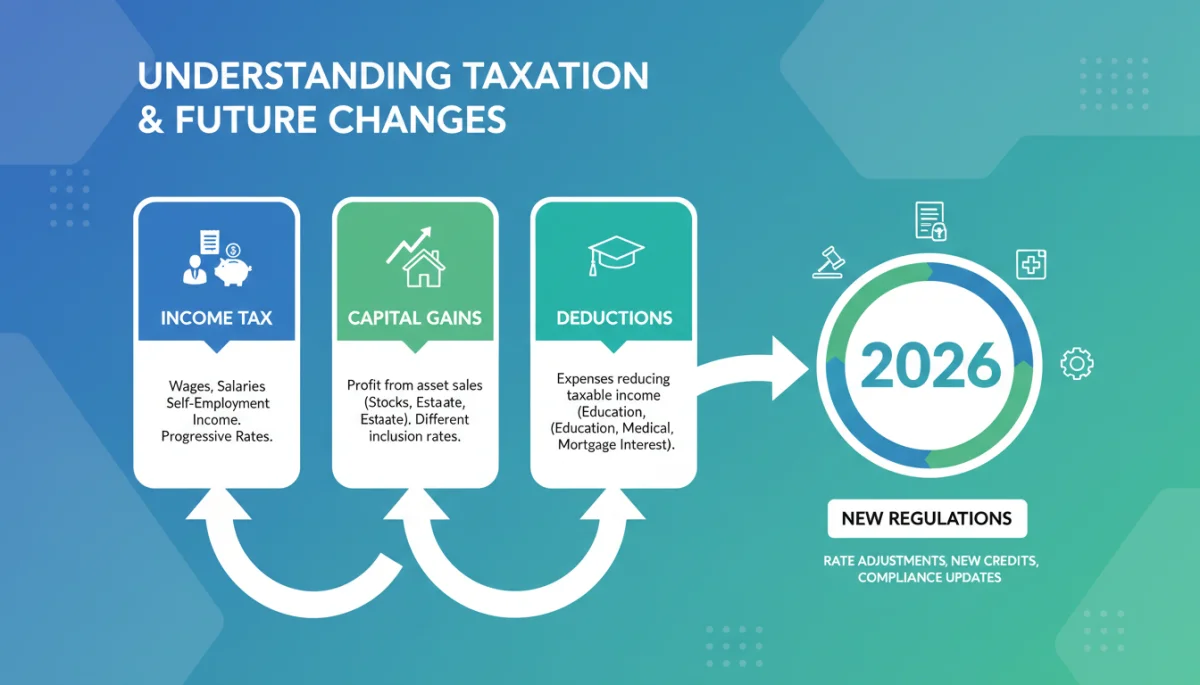
Qualified dividends and net investment income tax
- Qualified Dividends: Taxed at the same preferential rates as long-term capital gains, these could also be affected by rate changes.
- Net Investment Income Tax (NIIT): The 3.8% NIIT on certain investment income for high-income earners is expected to remain, but its interaction with other tax changes needs monitoring.
- Estate and Gift Tax: While not directly capital gains, changes to estate and gift tax exemptions can influence how inherited investments are treated.
Moreover, the potential for higher capital gains taxes could prompt investors to reconsider their asset allocation, favoring tax-efficient investments or strategies that defer gains. Understanding the nuances of these changes will be paramount for optimizing after-tax returns on investments.
Ultimately, the upcoming adjustments to capital gains and investment income taxation underscore the importance of ongoing portfolio review and strategic tax planning. Investors should consult with financial professionals to adapt their strategies to the new tax environment, ensuring their investment goals remain achievable.
Estate and gift tax exemptions
The 2026 tax code changes will bring significant alterations to estate and gift tax exemptions, an area critical for high-net-worth individuals and families engaged in intergenerational wealth transfer. The TCJA dramatically increased the estate and gift tax exemption to historically high levels, allowing more wealth to be passed on tax-free. However, these generous exemptions are scheduled to revert to pre-TCJA levels, adjusted for inflation.
This reversion means that the amount of assets an individual can transfer during life or at death without incurring federal estate or gift tax will be substantially reduced. For many, this could mean that their estates, which were previously below the exemption threshold, may now become subject to federal estate tax. This necessitates a thorough review of existing estate plans and proactive adjustments to minimize potential tax liabilities.
Strategies for wealth transfer
- Annual Gift Tax Exclusion: This exclusion, allowing tax-free gifts up to a certain amount per recipient annually, is expected to remain, offering a consistent strategy for reducing estate size.
- Irrevocable Trusts: Utilizing various types of irrevocable trusts can be an effective way to remove assets from an estate, shielding them from future estate taxes.
- Charitable Giving: Incorporating charitable giving into an estate plan can reduce the taxable estate while supporting causes important to the donor.
The reduction in estate tax exemptions will undoubtedly prompt many to accelerate their wealth transfer strategies before the end of 2025. This ‘use it or lose it’ scenario for the higher exemption amounts presents a unique window of opportunity for individuals to transfer significant assets tax-free.
In conclusion, the impending changes to estate and gift tax exemptions demand immediate attention for those with substantial assets. Reviewing and potentially revising estate plans with legal and financial advisors is crucial to ensure wealth transfer goals are met efficiently and with minimal tax impact.
Retirement planning implications
The 2026 tax code changes will inevitably ripple through retirement planning strategies, affecting how individuals save, invest, and ultimately withdraw funds in their golden years. While direct changes to retirement account contribution limits are often adjusted annually for inflation, the broader shifts in income tax rates and deductions will significantly influence the effectiveness of current retirement planning approaches.
For instance, if individual income tax rates increase as expected, the tax benefits of contributing to traditional IRAs and 401(k)s (which offer a tax deduction in the contribution year) might become even more appealing. Conversely, the appeal of Roth accounts, where contributions are made with after-tax dollars but qualified withdrawals are tax-free, could also shift depending on individual income trajectories and future tax rate expectations.
Maximizing retirement savings
- Traditional vs. Roth: Re-evaluate which type of retirement account aligns best with your expected future tax bracket.
- Catch-Up Contributions: Utilize catch-up contributions if eligible, as these remain a powerful tool for boosting retirement savings.
- Tax-Efficient Withdrawals: Develop a strategy for withdrawing funds from various retirement accounts to minimize tax liability in retirement.
The changes could also impact the taxability of Social Security benefits for some retirees, or influence decisions regarding when to claim benefits. Understanding these interconnected effects is vital for constructing a resilient retirement plan that can withstand future tax environments.
In essence, retirement planning in light of the 2026 tax code changes requires a holistic review. Individuals should assess their current savings vehicles, contribution levels, and withdrawal strategies to ensure they are optimized for the evolving tax landscape and their long-term financial security.
Strategies for personal financial planning in 2026
With the significant 2026 tax code changes on the horizon, proactive personal financial planning is not just advisable; it’s essential. Developing a robust strategy now can help mitigate potential negative impacts and even uncover new opportunities for tax efficiency and wealth growth. This involves a multi-faceted approach, encompassing income, investments, and estate considerations.
One primary strategy is to conduct a thorough review of your current financial situation, including income, expenses, investments, and existing estate plans. This baseline assessment will highlight areas most susceptible to the upcoming tax changes and inform necessary adjustments. Consulting with a qualified financial advisor is paramount in this process, as they can provide personalized guidance tailored to your specific circumstances.
Key planning actions
- Tax Loss Harvesting: Consider realizing investment losses in 2025 to offset gains and potentially reduce ordinary income.
- Accelerate Deductions: If possible, prepay deductible expenses in 2025 to claim them under potentially more favorable rules.
- Defer Income: Where feasible, defer income into 2026 if you anticipate being in a lower tax bracket, or if certain tax provisions become more favorable.
Furthermore, staying informed about ongoing legislative developments is crucial. While the sunset provisions are currently set, Congress could still intervene with new legislation that modifies or extends certain aspects of the TCJA. Adapting your plan as new information emerges will be key to maintaining an optimized financial position.
To conclude, navigating the 2026 tax code successfully requires vigilance and strategic action. By understanding the potential impacts on income, investments, and estate planning, and by engaging with financial professionals, individuals can position themselves to thrive in the evolving tax environment.
| Key Point | Brief Description |
|---|---|
| TCJA Sunset | Many provisions of the 2017 Tax Cuts and Jobs Act expire, reverting to prior law. |
| Deduction Changes | Standard deduction decreases; itemized deductions, including SALT, may become more valuable. |
| Capital Gains Impact | Potential increases in long-term capital gains tax rates and shifts in income thresholds. |
| Estate Tax Exemption | Exemption amounts for estate and gift taxes are set to significantly decrease. |
Frequently asked questions about 2026 tax changes
The main reason for the 2026 tax code changes is the expiration of many provisions from the 2017 Tax Cuts and Jobs Act (TCJA). These provisions were designed with a sunset clause, meaning they automatically revert to pre-TCJA law unless Congress takes action to extend or modify them before the end of 2025.
Individual income tax rates are generally expected to increase across most brackets, reverting to higher levels seen before the TCJA. This could lead to a reduction in your take-home pay and necessitate adjustments to your tax withholding or estimated tax payments to avoid underpayment penalties.
Yes, it is highly advisable to review your investment strategy. Potential increases in capital gains tax rates and changes to investment income taxation could impact your after-tax returns. Consider strategies like tax-loss harvesting or evaluating tax-efficient investment vehicles in consultation with a financial advisor.
Given the significant reduction in estate and gift tax exemptions, individuals with substantial assets should review and potentially update their estate plans. This might involve accelerating wealth transfers through gifting or establishing trusts to utilize the higher current exemption amounts before they revert.
For the most reliable and current information, consult official IRS publications, reputable financial news sources, and directly engage with certified public accountants (CPAs) or financial advisors specializing in tax planning. These professionals can provide guidance tailored to your specific financial situation as new details emerge.
Conclusion
The impending 2026 tax code changes represent a critical juncture for personal financial planning in the US. From individual income tax rates and deductions to capital gains and estate tax exemptions, nearly every aspect of personal finance stands to be impacted. Proactive engagement, diligent planning, and expert consultation are not merely recommendations but necessities for navigating this evolving landscape successfully. By understanding these shifts and adapting strategies accordingly, individuals can safeguard their financial well-being and continue to build toward a secure future.
