Investing Your First $5,000 Wisely: Young Professionals 2026

Anúncios
For young professionals in 2026, strategically investing your first $5,000 involves understanding diverse investment vehicles, managing risk, and aligning choices with long-term financial goals for optimal growth and financial stability.
Anúncios
Embarking on your financial journey as a young professional can feel overwhelming, especially when faced with the prospect of making your initial significant investment. However, understanding how to approach investing your first $5,000 wisely in 2026 is a pivotal step toward building lasting wealth and securing your financial future.
Anúncios
Understanding the Investment Landscape in 2026
The financial world is constantly evolving, and 2026 presents a unique set of opportunities and challenges for new investors. Technological advancements, shifting market dynamics, and evolving regulatory environments all impact how and where young professionals should consider placing their capital. A solid grasp of these factors is essential before diving into any investment.
For young professionals, the investment landscape of 2026 is characterized by increased accessibility to financial markets through intuitive digital platforms, but also by the need for greater discernment due to the proliferation of information and speculative assets. Understanding key economic indicators and global trends becomes more crucial than ever to make informed decisions.
The Rise of Digital Platforms and Robo-Advisors
Digital platforms and robo-advisors have democratized investing, making it easier and more affordable for young professionals to start. These platforms often offer low fees, fractional share investing, and automated portfolio management, which can be particularly appealing for those with limited capital and investment experience.
- Accessibility: Low minimum investment requirements open doors for new investors.
- Automation: Robo-advisors can manage portfolios based on your risk tolerance and goals.
- Diversification: Many platforms offer pre-built diversified portfolios.
- Cost-effectiveness: Lower expense ratios compared to traditional financial advisors.
Navigating Market Volatility and Inflation
The economic climate in 2026 continues to grapple with the aftermath of global events, leading to potential market volatility and inflationary pressures. Young investors must be prepared for these fluctuations and understand how they can impact their investments. Diversification and a long-term perspective are key strategies to mitigate these risks.
Inflation, in particular, can erode the purchasing power of your money over time. Therefore, choosing investments that have the potential to outpace inflation is vital. This often means looking beyond traditional savings accounts and exploring growth-oriented assets. Understanding the relationship between interest rates, inflation, and asset prices will empower you to make more resilient investment choices.
In summary, the 2026 investment landscape for young professionals is a blend of exciting technological advancements and persistent economic challenges. Leveraging digital tools while maintaining a keen awareness of market dynamics will be crucial for successful initial investments.
Establishing Your Financial Foundation Before Investing
Before you even think about where to put your first $5,000, it’s imperative to ensure your financial house is in order. A strong financial foundation acts as a safety net, protecting your investments from unforeseen circumstances and preventing you from needing to liquidate assets prematurely. This foundational work is often overlooked but is arguably the most critical step.
Many young professionals are eager to jump straight into investing, spurred by social media trends or peer discussions. However, neglecting fundamental financial hygiene can lead to significant setbacks. Prioritizing essential financial health metrics will provide the stability needed for confident and sustained investment growth.
Building an Emergency Fund
An emergency fund is non-negotiable. This is a separate savings account containing enough money to cover 3-6 months of essential living expenses. It acts as a buffer against unexpected job loss, medical emergencies, or car repairs, preventing you from having to tap into your investments.
Paying Down High-Interest Debt
High-interest debt, such as credit card debt or personal loans, can quickly negate any investment gains. The interest rates on these debts often far exceed the average returns you might expect from investments. Prioritizing the elimination of this debt is a financially savvy move, essentially guaranteeing a high return on your money by avoiding interest payments.
- Credit Card Debt: Typically carries the highest interest rates.
- Personal Loans: Can also have significant interest.
- Student Loans: Evaluate interest rates; some may be lower than investment returns.
- Auto Loans: Consider paying off faster if rates are high.
Setting Clear Financial Goals
What are you hoping to achieve with your investments? Are you saving for a down payment on a house, retirement, or perhaps a career change? Defining your short-term and long-term financial goals will dictate your investment strategy, risk tolerance, and time horizon. Without clear goals, your investments lack direction.
Establishing your financial foundation is not just about ticking boxes; it’s about creating a robust framework that supports your future financial aspirations. This initial effort ensures that when you do start investing, your $5,000 can truly grow without being siphoned off by preventable financial emergencies or high-cost debt.
Strategic Investment Options for Your First $5,000
Once your financial foundation is solid, it’s time to explore specific investment avenues for your first $5,000. This initial sum, while modest, offers a powerful starting point for compounding growth. The key is to choose options that align with your risk tolerance, time horizon, and financial goals in the 2026 market environment.
Diversification is crucial even with a smaller amount. Avoid putting all your eggs in one basket. Instead, consider a mix of accessible and growth-oriented assets that can provide a balanced approach to risk and return. The choices you make now can significantly influence your long-term wealth accumulation.
Low-Cost Index Funds and ETFs
For many young professionals, low-cost index funds and Exchange Traded Funds (ETFs) are an excellent starting point. These investment vehicles offer instant diversification across hundreds or thousands of stocks or bonds, reducing individual stock risk. They are managed passively, meaning lower fees compared to actively managed mutual funds.
- S&P 500 Index Funds: Track the performance of the 500 largest U.S. companies.
- Total Stock Market ETFs: Provide exposure to the entire U.S. stock market.
- International ETFs: Offer diversification into global markets.
- Bond ETFs: Can add stability and income, especially for a balanced portfolio.
Exploring Robo-Advisors for Managed Portfolios
If you prefer a hands-off approach, robo-advisors can construct and manage a diversified portfolio for you based on your risk profile. Platforms like Betterment or Schwab Intelligent Portfolios use algorithms to allocate your investment across various asset classes, rebalancing as needed. This can be a great way to start without extensive financial knowledge.
Considering Individual Stocks (with Caution)
While exciting, investing your entire $5,000 into individual stocks carries higher risk. If you choose this path, allocate only a small portion (e.g., 10-20%) of your capital to individual stocks after thorough research. Focus on established companies with strong fundamentals and a clear understanding of their business model. Avoid speculative investments with your foundational capital.
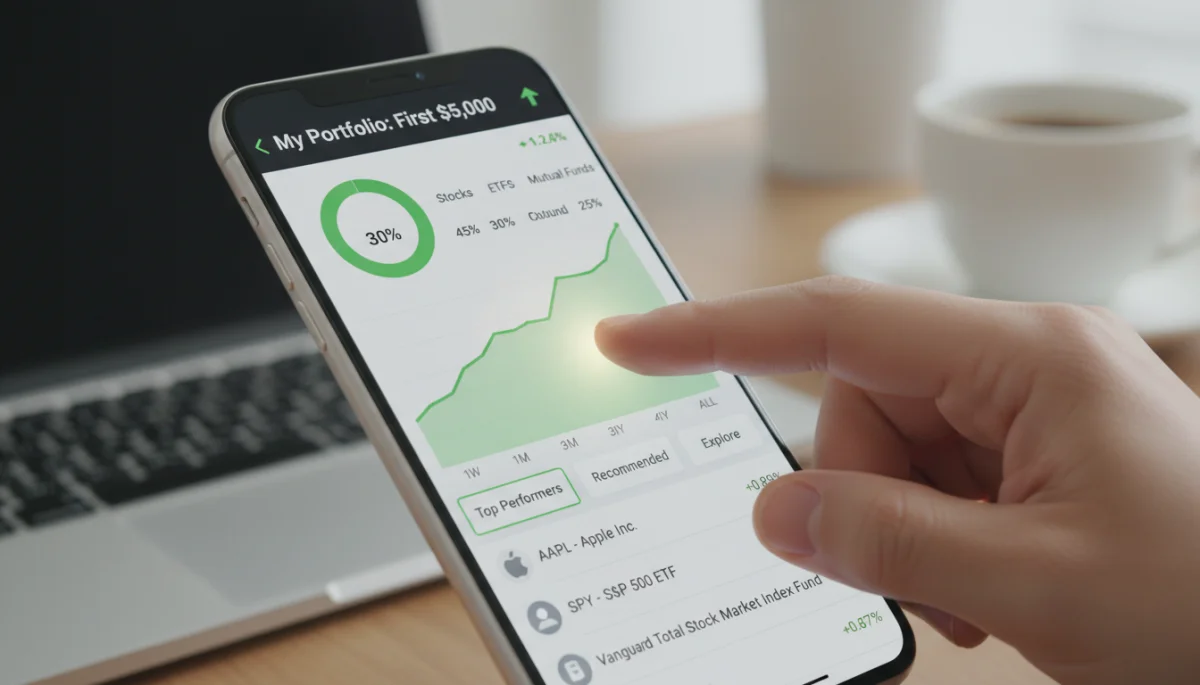
Careful consideration of these options will help you make informed decisions when investing your first $5,000. Prioritizing diversification and aligning investments with your personal financial strategy will set you on a path to sustained growth.
Leveraging Tax-Advantaged Accounts
One of the smartest moves a young professional can make when investing their first $5,000 is to utilize tax-advantaged accounts. These accounts, often provided by governments, offer significant tax benefits that can accelerate your wealth accumulation over time. Ignoring these opportunities means leaving free money on the table, which can have a substantial impact on your long-term returns.
Understanding the nuances of each account type and how they fit into your overall financial plan is crucial. The tax savings and growth potential offered by these vehicles are designed to encourage long-term saving and investing, making them ideal for young professionals just starting their investment journey.
401(k) and Employer Match
If your employer offers a 401(k) plan, especially one with a matching contribution, contributing at least enough to get the full match should be your absolute top priority. An employer match is essentially a 100% return on your investment from day one, an unparalleled benefit that you shouldn’t pass up. This can be a powerful way to make your initial $5,000 grow even faster.
- Free Money: Employer matching contributions are a direct boost to your savings.
- Tax Benefits: Contributions are often pre-tax, reducing your taxable income.
- Compounding Growth: Tax-deferred growth allows your investments to compound faster.
- Automatic Savings: Contributions are typically deducted directly from your paycheck.
Roth IRA: Tax-Free Growth in Retirement
A Roth IRA is another excellent option, particularly for young professionals who expect to be in a higher tax bracket in retirement. Contributions to a Roth IRA are made with after-tax dollars, but qualified withdrawals in retirement are entirely tax-free. This offers incredible flexibility and tax savings down the line, especially as your income grows.
Even if you can only contribute a portion of your $5,000 to a Roth IRA, the long-term benefits are substantial. The tax-free growth over decades can turn a modest initial investment into a significant retirement nest egg, making it a cornerstone of smart financial planning for young professionals.
Maximizing tax-advantaged accounts is a fundamental strategy for any investor, but especially for those with their first $5,000. These vehicles provide a robust framework for growth, ensuring that more of your money works for you without being eroded by taxes.
Managing Risk and Diversification
Risk management and diversification are cornerstones of sound investment strategy, particularly when starting with your first $5,000. While the desire for high returns is natural, understanding and mitigating potential downsides is equally important. A well-diversified portfolio helps cushion against market downturns and reduces the impact of any single underperforming asset.
For young professionals, the concept of risk might seem daunting, but it’s an inherent part of investing. The goal isn’t to eliminate risk entirely but to manage it intelligently, aligning it with your personal comfort level and financial objectives. Diversification is your primary tool in this endeavor.
Understanding Your Risk Tolerance
Before making any investment, honestly assess your risk tolerance. How comfortable are you with the possibility of losing money? Your age, income stability, and financial goals all play a role in determining your appropriate risk level. Young professionals generally have a longer time horizon, which allows them to take on more risk, as they have time to recover from market fluctuations.
The Power of Diversification
Diversification involves spreading your investments across various asset classes, industries, and geographies. This strategy minimizes the impact of a poor performance in any single investment. For your first $5,000, this often means investing in broad market index funds or ETFs rather than individual stocks.
- Asset Classes: Mix of stocks, bonds, and potentially real estate or commodities.
- Industries: Don’t concentrate all investments in one sector (e.g., technology).
- Geographies: Invest in both domestic and international markets.
- Investment Styles: Blend growth stocks with value stocks.
Regular Portfolio Rebalancing
Over time, your portfolio’s original asset allocation can drift due to market performance. Rebalancing involves adjusting your portfolio back to your target allocation. If stocks have performed exceptionally well, you might sell some to buy more bonds, or vice-versa. This helps maintain your desired risk level and ensures you’re not overly exposed to any single asset class.
Effectively managing risk and diversifying your investments are critical for protecting your initial capital and fostering sustainable growth. These practices ensure that your investment journey is robust and resilient, even in the face of unpredictable market conditions.
The Importance of Continuous Financial Education
Investing your first $5,000 is merely the beginning of a lifelong journey in financial management. The markets, economic conditions, and investment products are constantly evolving, making continuous financial education an indispensable part of being a successful investor. Staying informed empowers you to adapt, make better decisions, and capitalize on new opportunities.
Many young professionals mistakenly believe that once an investment is made, the learning stops. However, the most successful investors are perpetual students, always seeking to deepen their understanding of finance and economics. This ongoing commitment to learning not only protects your investments but also opens doors to greater financial potential.
Staying Informed About Market Trends
Regularly reading financial news, reputable blogs, and economic reports can help you understand broader market trends. While you shouldn’t react to every headline, being aware of major shifts in interest rates, inflation, technological advancements, or global events will inform your long-term strategy.
Understanding New Investment Vehicles
The financial landscape of 2026 is likely to introduce new investment vehicles and strategies. From advancements in sustainable investing to innovative digital assets, continuous education ensures you are aware of these options and can evaluate their suitability for your portfolio. Don’t be afraid to research and understand emerging opportunities.
Learning from Experience and Mistakes
Every investment decision, whether successful or not, offers a learning opportunity. Reflect on your choices, understand why certain investments performed as they did, and adjust your approach accordingly. Financial education isn’t just theoretical; it’s also practical, built on real-world experience.
- Read Books: Classic and contemporary finance books offer timeless wisdom.
- Attend Webinars: Many financial institutions offer free educational content.
- Follow Experts: Identify reputable financial experts and thought leaders.
- Use Financial Calculators: Understand compounding and future value.
Continuous financial education is not a luxury; it’s a necessity for young professionals aiming for long-term financial success. By committing to lifelong learning, you transform yourself from a passive investor into an active, informed participant in your financial future.
Common Pitfalls to Avoid When Investing Your First $5,000
While the excitement of investing your first $5,000 is palpable, it’s equally important to be aware of common pitfalls that can derail your progress. Many new investors, especially young professionals, make avoidable mistakes that can lead to losses or missed opportunities. Recognizing these traps is the first step toward sidestepping them effectively.
The allure of quick riches or the fear of missing out (FOMO) can often lead to impulsive decisions. However, a disciplined and patient approach is far more effective. By understanding and actively avoiding these common errors, you can protect your initial capital and foster sustainable growth.
Chasing Hot Tips and Speculative Investments
The temptation to invest in the next big thing, based on social media hype or friends’ recommendations, is strong. However, speculative investments are often highly volatile and can lead to significant losses. For your first $5,000, focus on proven, diversified strategies rather than chasing fleeting trends. Building wealth is a marathon, not a sprint.
Ignoring Diversification
Putting all your money into a single stock or a single asset class is a recipe for disaster. While it might seem appealing if that single investment performs well, the risk of a significant loss is immense. Diversification is your best defense against unexpected market downturns or the poor performance of an individual asset.
Emotional Investing
Market fluctuations can trigger strong emotions – fear during downturns, greed during upturns. Making investment decisions based on these emotions, rather than on a rational, long-term strategy, is a common pitfall. Stick to your investment plan, avoid panic selling, and resist the urge to chase rising markets.
- Fear of Missing Out (FOMO): Leading to impulsive buys at peak prices.
- Panic Selling: Liquidating assets during market corrections, locking in losses.
- Overconfidence: Taking on too much risk after a period of success.
- Anchoring: Focusing too much on an asset’s past price rather than its future potential.
Neglecting Fees and Taxes
Even small fees and taxes can significantly erode your returns over time. Pay attention to expense ratios of funds, trading commissions, and capital gains taxes. Utilizing tax-advantaged accounts and choosing low-cost investment options can help you maximize your net returns.
Avoiding these common pitfalls will significantly enhance your chances of success when investing your first $5,000. A disciplined, diversified, and emotionally detached approach is the hallmark of a savvy investor.
| Key Point | Brief Description |
|---|---|
| Build Foundation First | Prioritize emergency fund and high-interest debt before investing. |
| Diversify Investments | Spread your $5,000 across various assets like index funds or ETFs. |
| Utilize Tax-Advantaged Accounts | Maximize 401(k) match and consider Roth IRA for tax benefits. |
| Continuous Education | Stay informed about market trends and new investment vehicles. |
Frequently Asked Questions About Investing Your First $5,000
The absolute first step is to establish a solid financial foundation. This includes building an emergency fund covering 3-6 months of expenses and paying off any high-interest debt, such as credit card balances. These steps ensure you have a safety net and prevent debt from eroding potential investment gains.
While individual stocks can offer high returns, they also come with higher risk. For your first $5,000, it’s generally recommended to prioritize diversification through low-cost index funds or ETFs. If you choose individual stocks, allocate only a small portion and conduct thorough research to minimize risk.
Tax-advantaged accounts are extremely important. Contributing to a 401(k) with an employer match provides free money, and a Roth IRA offers tax-free growth and withdrawals in retirement. These accounts significantly boost your long-term returns by reducing your tax burden, making them crucial for young professionals.
Diversification means spreading your investments across various assets, industries, and geographies. It’s crucial for a small investment like $5,000 because it minimizes risk. If one investment underperforms, others can compensate, protecting your capital and ensuring more stable growth over time.
Young professionals should avoid chasing hot tips, ignoring diversification, and making emotional investment decisions. Additionally, neglecting to understand and minimize fees and taxes can significantly erode returns. A disciplined, long-term approach is key to avoiding these common and costly mistakes.
Conclusion
Investing your first $5,000 as a young professional in 2026 is a significant milestone that lays the groundwork for future financial security. By prioritizing a strong financial foundation, strategically choosing diversified, low-cost investment options, leveraging tax-advantaged accounts, and committing to continuous financial education, you can navigate the complexities of the market with confidence. Avoiding common pitfalls and maintaining a disciplined, long-term perspective will empower you to grow your capital effectively, transforming a modest initial investment into substantial wealth over time. Your financial journey begins now, and informed decisions will be your greatest asset.
